Where is ‘Wilfrid Israel’ Street in Jerusalem?
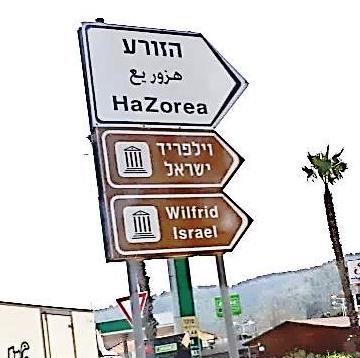
Sorry, you could look on Waze or Google Maps, but you won’t find a street in Jerusalem (or elsewhere in Israel) named for Wilfrid Israel: a remarkable Jew, and proud German, who saved many more Jews than Oskar Schindler – before and during the Holocaust.
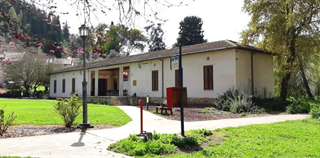
However, in the heart of Kibbutz Hazorea (pronounced: ha-zo-RAY-ah), in the western Jezreel valley of Israel, there is a boutique art museum named for Wilfrid Israel. Friends of his from Berlin were among the founders of the kibbutz in 1934, and Wilfrid visited the fledgling kibbutz twice (in 1934 and 1940), but he was not a member. How did he come to merit having a museum in his name established on this particular kibbutz?
To discover the answers to the questions above, you are encouraged to read the biography, see the movie, and/or or, at least, read about him on Wikipedia (See “Sources and References” below). These were the main sources of information for this post. In the meantime…
In honor of Israel‘s Holocaust Martyrs’ and Heroes’ Remembrance Day (Yom HaShoa VehaGevura), which will be observed on April 7/8, 2021, I present below a thumbnail overview of the unassuming and indefatigable Wilfrid Israel.
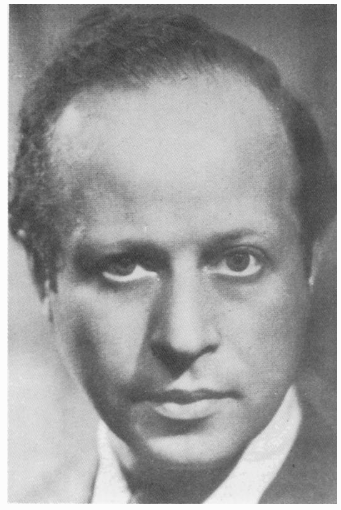
Wilfrid Berthold Jacob Israel (hereafter: Wilfrid) was born in London on July 11, 1899 to a wealthy Jewish family, but grew up and lived in Berlin. His great-grandfather, Nathan, founded the department store “N. ISRAEL” in Berlin, which remained in business until February, 1939. Wilfrid dreamt about becoming a sculptor, but with family pressure he eventually assumed the directorship of “N. Israel,” until the department store was taken over by the Nazis.
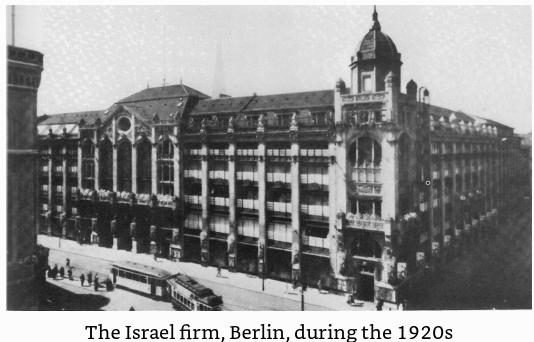
Wilfrid’s mother’s grandfather, Nathan Marcus Adler, was Chief Rabbi of the United Hebrew Congregations of Great Britain. The family Wilfrid was born into was not religiously observant; however, much like other prosperous German Jews in the early 20th century, they were very involved in the Jewish community.
Wilfrid was active in the Werkleute (literally, “work people”) – a German Jewish youth movement, in which he and his friends studied Jewish history and customs, but were not outwardly religious. Some of his friends from the Werkleute made Aliya (moved to Israel) in 1933, and in 1934 established Kibbutz Hazorea. Meanwhile, Wilfrid was attracted to Martin Buber’s intellectual approach to Judaism and utopian Zionist vision of a bi-national state.
Following are some highlights of Wilfrid’s many accomplishments (not in chronological order):
* Served as a key link – together with the Quakers from the UK – in organizing the “Kindertransport” operation that brought over 10,000 German Jewish children to England in the late 1930s.
* Aided Recha Freier in the founding of “Youth Aliya” (the effort to bring children to pre-state Israel before and during World War II).
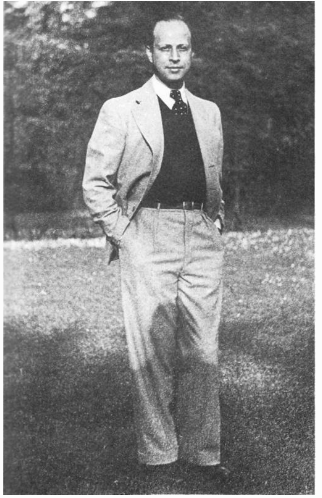
about 1932 (Yosef Amir)
* Was appointed the international chairman of the Ben Shemen youth village in Palestine.
* Saved hundreds of Jewish – as well as non-Jewish – employees of “N. Israel” department store from the clutches of the Nazis.
* Ransomed hundreds of Jews from the Gestapo.
* Convinced the British authorities to establish a transit camp in Britain for young men released from the concentration camps in Germany, and consequently saved thousands of lives.
* Met often with Zionist leaders; such as: Chaim Weizmann, Max Warburg and Henrietta Szold.
* Was a frequent guest at the home of Albert Einstein, who said about Wilfrid: “Never in my life have I come in contact with a being so noble, so strong and selfless as he was – in very truth a living work of art” (From a condolence letter to Wilfrid’s mother, Amy Israel, soon after Wilfrid was killed; from the archives of the Wilfrid Israel Museum).
* Studied in the adult Jewish education settings established by Martin Buber, who described Wilfrid as “a man of great moral stature [who] was dedicated to the service of others.” (From N. Shepherd, see below)
* Escaped to London in 1939 and became an advisor to British MPs and ministers regarding the fate of European Jews influencing policy makers behind the scenes.
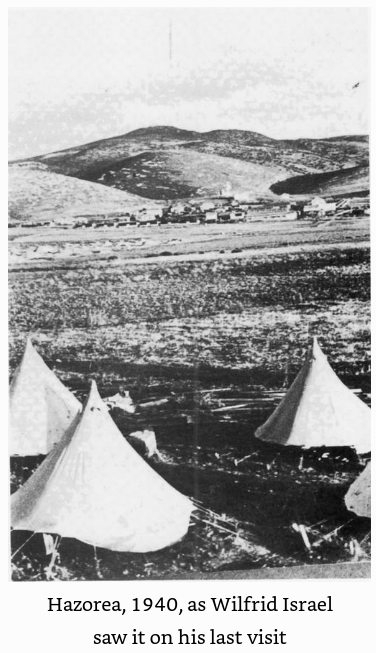
* Seriously considered making Aliya (moving to pre-state Israel) when the war would come to an end. In fact, at his request, the members of Kibbutz Hazorea agreed (after a heated debate) that Wilfrid would be allowed to build a bungalow on their property where he could fulfill his dream of being a sculptor.
* Traveled to Portugal and Spain to help Jewish children make their way to Palestine.
All the above – and much more – Wilfrid managed to achieve until his tragic death just a month shy of his 44th birthday. On June 1, 1943, he was flying from Lisbon to London when the commercial airplane he was on was shot down by the German Luftwaffe (Nazi air force).
In his will (which, ironically, he had written just before he flew to Portugal) Wilfrid had bequeathed his extensive art collection of mostly sculptures from the Far East to Kibbutz Hazorea. The kibbutz members began building the Wilfrid Israel Museum in 1947, and opened the museum in 1951.
In August, 2020, there was a major burglary at the museum and, unfortunately, many of Wilfrid’s Far Eastern sculptures were stolen; to date, none have been recovered. Nonetheless, the museum still functions and exhibits works of contemporary Israeli artists.
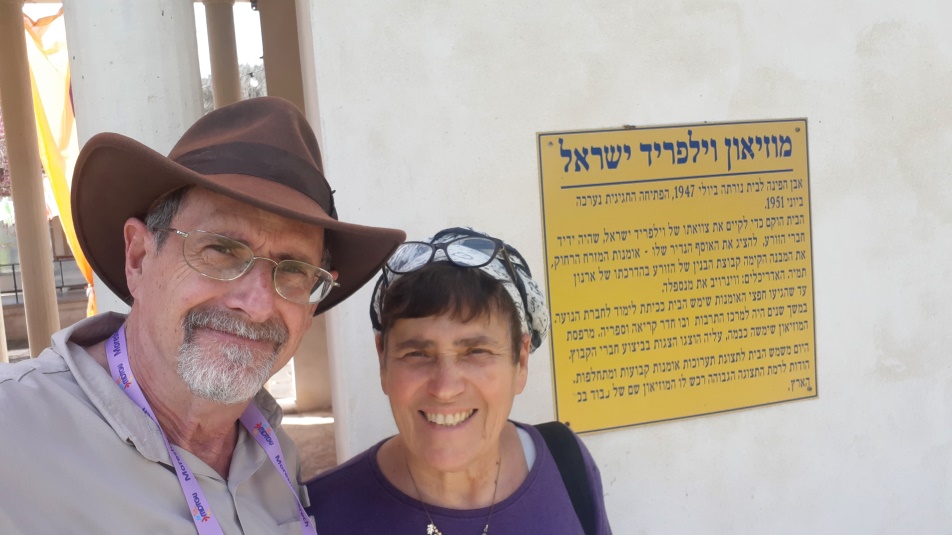
Wilfrid Israel Museum, March, 2021
My wife, Sue, and I recently made a “pilgrimage” to the museum, which is a beautiful tribute to a humble but amazing personality.
So, how is it that we don’t hear more about Wilfrid Israel (and yours truly only found out about him a couple of months ago)? Why is there no street named for him? How is it that even Kibbutz Hazorea members don’t publicize Wilfrid’s heroic life? There are a number of possible answers to these questions, which I would be happy to discuss in a virtual lecture/tour. Contact me for more information. In the meantime, I encourage you to do some research (see the following):
Sources and References
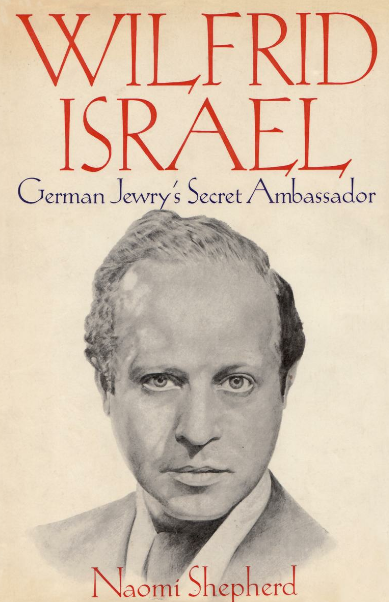
>The comprehensive and fascinating book, “Wilfrid Israel: German Jewry’s Secret Ambassador,” by Naomi Shepherd, re-published in the UK by Halban Publishers Ltd as an ebook only. See: https://www.halbanpublishers.com/nonfiction#/wilfrid-israel/
A print edition, under the name: A Refuge from Darkness: Wilfrid Israel and the Rescue of the Jews, is available from Amazon.
I am grateful to the publisher and author for permission to display photos from the book in this post.
>The Israeli filmmaker, Yonatan Nir, made an outstanding documentary movie, “The Essential Link: The Story of Wilfrid Israel,” in 2017. For a trailer in English, see: https://www.wilfridisraelfilm.org/
The film will be screened on the eve of Holocaust Memorial Day, April 7, 2021 at 8pm, Israel time. (The registration form is in Hebrew: https://www.yonatannir.com/wilfridisrael)
>Article about the museum robbery: https://www.timesofisrael.com/valuable-statues-stolen-from-kibbutz-museum-in-northern-israel/
>Wikipedia article: https://en.wikipedia.org/wiki/Wilfrid_Israel
>Website about the “Stopelsteine” or Stumbling Block (historical marker) in Berlin in memory of Wilfrid: https://www.stolpersteine-berlin.de/en/biografie/264
>Jessica Steinberg’s 2017 article about the aforementioned movie: https://www.timesofisrael.com/wilfrid-israel-an-unsung-holocaust-hero-gets-his-own-film/