Categories
Holidays Jerusalem Music Personalities

Light and Jerusalem / אור וירושלים

Starting Sunday evening, May 9 through Monday, May 10 we observe “Yom Yerushalayim” – Jerusalem Day, marking the day on the Hebrew calendar when the Old City of Jerusalem (and especially the Kotel  – the Western Wall), was liberated during the Six-day War and became part of one united Jerusalem under Israeli control. For many in Israel – and throughout the Jewish world – this is both a national and religious holiday. (Not everyone sees it that way.)

For me, the holiday is particularly significant, as I was blessed to visit Israel and Jerusalem for the first time, on the Ramah Seminar, during the summer of 1967 – just a few weeks following the Six-Day War. Thirteen years later my family and I moved to Jerusalem. For nearly 40 years our home has been in the southern neighborhood of Gilo, founded just four years after the war in what became Greater Jerusalem.
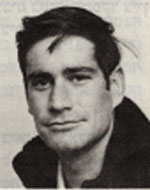
Yosef Sarig, 1944-1973

There have been many songs written about Jerusalem – before and since the Six-Day War. I would like to share one of my favorites with you – less known internationally than the famous “Jerusalem of Gold.” The song, “OHR VIRUSHALAYIM” – “Light and Jerusalem,” was written by Yosef Sarig (pronounced: sah-REEG). On this post you’ll find a link to one of several renditions of the song, as well as a link to the lyrics in Hebrew and English. The story of how it came about is as moving as the song itself:

The following is based on recollections by Yosef’s mother and brother, Tikva and Tzachki.  His father was General Nahum Sarig, commander of the legendary Palmach unit in the Negev Desert during the 1948 War of Independence.

The Sarig family lived on kibbutz Bet Hashita in the Bet She’an valley in the north of Israel. In January of 1963, Yosef’s grandmother died. Since she was a fourth – or fifth – generation Jerusalemite, the parents borrowed one of the kibbutz trucks to bring the deceased to eternal rest in Jerusalem. The parents sat in the cabin of the truck and their five children sat in the back – together with the coffin. It was a particularly wintry day and it poured most of the way. All of a sudden, as they approached the beginning of the steep ascent to Jerusalem (at Sha’ar Hagai), the sun started to come out and a rainbow appeared. The rays of the sun piercing through the clouds, which accompanied them all the way to the cemetery, particularly made an impression on Yosef.

In January, 1972, Yosef, who was a talented musician and song-writer, was asked to write a song about Jerusalem for the Gevatron (singing) Ensemble’s performance in honor of Jerusalem Day that year.  One evening he went to his room and in matter of hours wrote both the music and lyrics for the song. He came out and – as was his custom – he showed the lyrics to his mother asking if it was any good. She saw right away that his words described the light that they had seen on their way to Jerusalem exactly nine years earlier. She looked at him and said, “It’s enchanting… but what about the music?” He pulled out another page with the music which seemed to resonate perfectly with the lyrics.

On October 10, 1973, just a year and five months after the song was first performed, Major Yosef Sarig fell in battle on the Golan Heights. He was buried in his kibbutz along with ten other sons of the kibbutz who died in the Yom Kippur War. (The kibbutz was the community in Israel with the highest per capita casualties of that war.) Yosef’s brother, Tzachki, had been wounded at the beginning of the war and was in the hospital when Yosef was killed. His family waited until Tzachki was on his way to recovery before telling him the sad news. He became depressed with guilt, saying: “Why him and not me!”   


OHR VIRUSHALAYIM  became an instant “hit” and ever since has become an integral part of Israel’s musical legacy. It’s been translated into several languages. A folk dance to the song was choreographed by Shoshana Koplewitz. Ironically the lyrics do not mention the name of the city, except in its title. There’s no need; the song describes Jerusalem in a most unique and beautiful way.  In 1975 Yosef was posthumously awarded the Medal of Distinguished Service (Itur Hamofet), but his songs – especially Ohr Virushalayim – were his awards to the nation. May his memory continue to be for a blessing.

Some links:

The song as sung by the Gevatron Ensemble:

https://youtu.be/94M7zG-Hcy4


The lyrics in Hebrew and English: See PDF above to view or download.

A clip of the folk dance (for instructions for dancing, watch from the beginning of the video).
https://youtu.be/KQAVpGdj4z4?t=152

שַׁ֭אֲלוּ שְׁל֣וֹם יְרוּשָׁלִָ֑ם יִ֝שְׁלָ֗יוּ אֹהֲבָֽיִךְ׃
Pray for the Peace of Jerusalem.
May those who love you be at peace. (Psalm 122)
Categories
History Holidays Personalities

10 Curious Facts About the Birth of the State of Israel

Happy Israeli
Independence Day

The State of Israel is celebrating its 73th year of independence this week (April 14 eve-15 in 2021), which is always preceded by a very sombre Memorial Day – Yom Hazikaron. This year we memorialized the 23,928 soldiers that fell in defending the State. The dramatic events leading up to the Declaration of the State of Israel on Friday, the 5th of Iyyar 5708 (corresponding then to May 14, 1948), are too many to discuss here. But here are 10 quick facts that you may not have known from other sources – unless you already visited Israel’s Independence Hall, currently undergoing major renovations. This is just a selection of my favorite tidbits:

1. The Provisional Council (the pre-state quasi-government) only voted to declare independence on May 12 – just two days before the declaration. David Ben Gurion, the head of the Council, said, “It’s now – or never!” The vote was 6 in favor and 4 against (there were three other members of the Council who could not attend: two were under siege in Jerusalem and one was abroad). That was a close call!

2. Although the British were only set to depart on Saturday, May 15, the Provisional Council knew that it would be impossible to hold a ceremony declaring independence on Shabbat (the Sabbath), so they set the time for Friday at 4:00pm, just a few hours before Shabbat was to start, and 8 hours before the official end of the British Mandate. People were asked to come at 3:30 and the ceremony started precisely at 4:00 (yes, it actually started on time!).

3. It would have been most appropriate to announce independence in Jerusalem, the historic capital of the Jewish people; however, city was under siege by local Arab militia. Consequently, it was decided to hold the ceremony at what had been the art museum of Tel Aviv since 1936. Prior to that it had been the private home of Meir Dizengoff – the first home built in the new “neighborhood” of Tel Aviv. In 1911 Dizengoff became the first mayor of Tel Aviv. Outside the Hall of Independence is a sculpture of Dizengoff riding his female horse, so there is Mayor Meir on his mare!

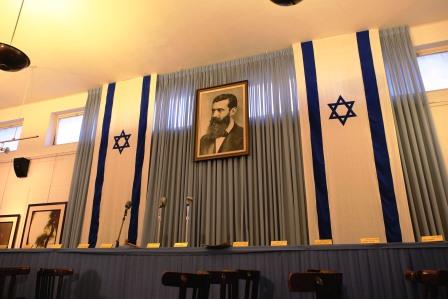
Independence Hall Dias Today

4. The art museum was chosen because the main hall had high windows and the room could have served as a makeshift bomb shelter, in case the Arab countries would attack that day. The museum didn’t have enough chairs for the some 250 people who were invited to attend the ceremony. So, on Friday they had to run around to local cafes asking to borrow chairs!

(Pri-Or_Photohouse)

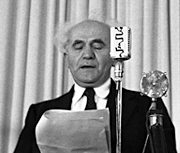
5. They knew they would need amplification for the ceremony, so they turned to a store called “Tzlil” (literally: sound or tone) and asked to borrow a microphone and amplifier. The owner generously said that he would donate the equipment – on the condition that the name of his store appear on the microphone. Thus “Tzlil” became the first advertisement in the new State of Israel! (Left: see the writing on the microphone next to David Ben Gurion)

Outside the Hall of Independence

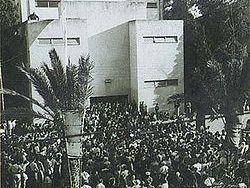
6. Invitations had to be hastily hand-delivered to some 200+ people. The invitation said that it was classified and that the invitees should keep the contents of the invitation secret! (See the photo – right – of the throngs of people waiting outside during the Declaration!).

7. The text of the Declaration of Independence wasn’t finalized until an hour or so before the ceremony. Ben Gurion was busy making corrections practically on his way to the ceremony! A fancy parchment had been prepared – but it was blank! Ben Gurion read the Declaration from the type-written, correction-riddled pages, hidden by the parchment! Those that were asked to come up and sign the Declaration following the ceremony did so on blank parchment!

(Israel Philatelic Federation)

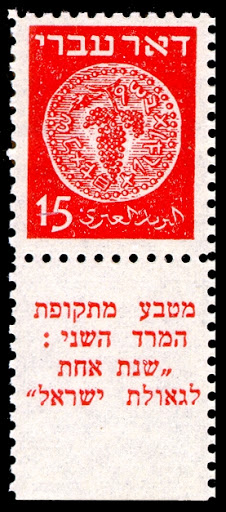
8. The name of the new state was not announced prior to that Friday, which is why there was such a rousing applause during the declaration ceremony when David Ben Gurion (who became prime minister) announced that the new country would be called: “The State of Israel.” Among other names that had been suggested were: Judea, Zion and even Eretz Yisrael (the Land of Israel). But all of the trappings of a new state had to be put into motion even before the declaration. Not knowing what the country would be called they had issued postage stamps that read: דואר עברי “Do’ar Ivri” or “Hebrew Post”! (See picture, left)

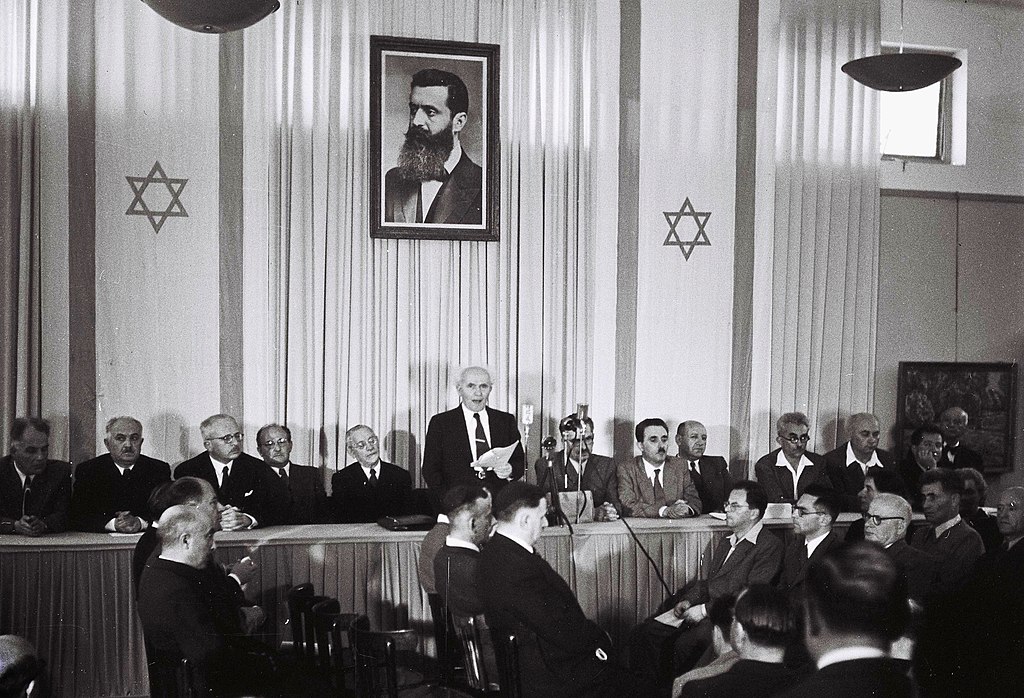
9. There were only two women who signed the Declaration parchment: Rachel Cohen-Kagan (who became a member of the first Knesset/Parliament) and Golda Meyerson, who later Hebraized her surname to Meir – destined to serve as prime minister of the State, 1969-1974. (In the picture below, one can see a partial profile of her, sitting in front of the third man from the right at the dais). Golda Meir cried through much of the ceremony. When asked if she had been crying because she was overwhelmed with excitement, she is purported to have responded that she was crying for the 6 million Jews for whom the State of Israel was declared a few years too late.

TEL AVIV, ISRAEL – MAY 14: In this handout from the GPO, David Ben Gurion, who was to become Israel’s first Prime Minister, reads the Declaration of Independence May 14, 1948 at the museum in Tel Aviv, during the ceremony founding the State of Israel. (Photo by Zoltan Kluger/GPO via Getty Images) *** Local Caption *** David Ben Gurion

10. In the crowded room there wasn’t enough space for the orchestra, which had to be placed one floor above the hall. When Ben Gurion called the meeting to order, someone had to run upstairs to tell the orchestra to start playing Hatikva -“the Hope,” which was later adopted as the national anthem of the new State of Israel.

Yom Ha’atzmaut Sameach! יום העצמאות שמח

Happy Israeli Independence Day!

Categories
Holidays Jerusalem

Jerusalem: Follow the Lights!

The amazing festival of lights in Jerusalem! Even if you can’t make it to drive around the city to the displays you can enjoy it vicariously by clicking above. You’ll find some very brief guiding clips for the different sites (yours truly “appears” at the Israel Museum and at the Cinematheque bridge). Enjoy and have a most festive Purim!

Categories
Holidays Videos

A Short Video: Israel’s 72nd Independence Day

In honor of Israel’s 72nd birthday (which was celebrated on April 29), some tour guide colleagues – and yours truly – put together a short video of Israel sites. We hope you’ll get to Israel soon to see them in real time! The background song, written and performed by Hazzan Iris Beth Weiner says, “I’m so grateful for the State of Israel!”