Categories
Music

She Wrote Our Song

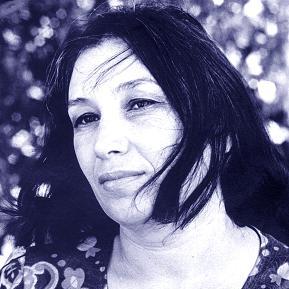
Naomi Shemer

On a warm summer evening on June 26, 2004, corresponding to the 7th day of the Hebrew month of Tammuz, Naomi Shemer parted from this world. She left us a legacy of hundreds of songs most of which were both written and composed by her, others were melodies that she composed for poems that were written in Hebrew or that she translated from other languages.

Rahel Bluwstein

Many remember Naomi Shemer for her iconic “Yerushalayim Shel Zahav” (Jerusalem of Gold), which she wrote/composed just a few weeks before the outbreak of the Six Day War in 1967.  Others will forever sing the melodies she composed to several poems of “Rahel” (Rahel Bluwstein, 1890-1931).

Both of these women had spent significant parts of their lives along the southwestern shore of the Kinneret – the Sea of Galilee: Rahel had been trained in agriculture at the Kinneret Courtyard, and Naomi was born (on the 17th of Tammuz) on Kibbutz Kinneret, about a kilometer from the Courtyard. Both were laid to rest in the Kinneret Cemetery located  between the two communities, right on the shore of the lake/sea of Kinneret. Many people make a pilgrimage to the cemetery to pay homage to the Zionist pioneers buried there, to read poems by Rahel’s grave and to sing songs – often with guitar or other accompaniment – by Naomi’s.

The journalist Yair Lapid (now Israel’s Foreign Minister and Alternate Prime Minister) had written a poetic eulogy for Naomi, which he called, “Hagevira Mul Ha’agam” – “The Lady by the Lake.” Kobi Oshrat put that poem to music, and designated veteran singers Yigal Bashan and Miki Gavrielov to record it. In 2014 an initial recording was made in the studio (a kind of dress rehearsal), but Yigal, who had been suffering from an extended illness, died before the final “cut” could be made. The project was temporarily shelved.
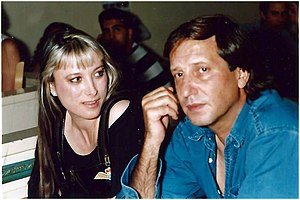
Mika and Yigal Bashan

In honor of what would have been Naomi Shemer’s 91st birthday this year,  Kobi Oshrat asked Yigal’s widow, Mika Bashan, to allow him to release the song to the public, even though it was not a polished recording. She not only agreed but helped in its production. It can be found on the YouTube link: https://www.youtube.com/watch?v=QxorKL42YrE .

The lyrics of the song can be found here as a PDF. I’ve taken the liberty of translating them into English. (Suggested corrections are welcome.)

The refrain of the song is “She wrote our song.”  Indeed, Naomi Shemer’s songs reflect the very soul of Israeli and Jewish culture.

May the memories of Naomi, Rahel and Yigal be for an everlasting blessing.

Categories
Media Torah Portion

Grasshopppers or Grapes: Plan your Trip to Israel Now

Please READ and SHARE.

So here’s what’s behind the strange title. The lead story of the weekly Torah portion – “Shelah Lekha” (Numbers 13-15) – which we will read on Shabbat, June 5,  is about the Twelve Spies (one from each tribe) who, at God’s command, are sent from the desert by Moses to scout the Land of Canaan (later to be known as the Land of Israel). Like TripAdvisor, they are given a list of things to look for and to evaluate.

Forty days passed. When they returned to camp, all the scouts had some positive things to say about the resources of the land. They even brought back samples of fruit, including a cluster of grapes that was so heavy it had to be carried on a pole carried by two people (the inspiration for the emblem of Israel’s Ministry of Tourism – see the picture).

Tragically, ten of the twelve scouts came to the conclusion that “…the country that we traversed and scouted is one that devours its settlers. All the people that we saw in it are men of great size…; we looked like grasshoppers to ourselves, and so we must have looked to them” (13:32-33).  Only Joshua and Caleb said: “The land that we traversed and scouted is an exceedingly good land….Have no fear of the people of the country…. the Lord is with us” (14:7,10).

This is a story of PERCEPTIONS.  Twelve people saw the exact same land and its inhabitants, ten of whom were so traumatized that they claimed that they looked like grasshoppers in the eyes of the “giants” – how did the 10 scouts know how they looked in the eyes of the inhabitants?! It seems to me they were projecting their fears and lack of faith on to the potential enemies. Only two scouts brought back a positive overall assessment. Caleb and Joshua were not delusional; they saw the identical, daunting challenges of the Land that the other ten saw; however, their perception and conclusions were different. They had faith that God will help the Israelites prevail.

The consequences of the negative reviews are well-known: the Israelites were doomed to wander the desert for 40 years – one for each of the days that the tribal representatives had scouted the Land, thus assuring that the generation of the ten “bad-reporters” would never merit to enter the Land. However, Caleb and Joshua and their families are to be rewarded and were allowed to settle in the Promised Land.


It’s 2021. The State of Israel and all who love her (“warts and all”) are faced with a Sisyphean war of perceptions. The news media, and certainly the social media, have decided overwhelmingly that the blame for the recent war between Hamas and Israel lies with – you guessed it – Israel. You’ve heard/seen the claims. You’ll find very little mention of the 4000+ rockets that were shot from Gaza into Israel along with the deaths and damage they caused. Their scathing reports (some blatant lies, others distortions of the truth, still others simply guilty of omission or any attempt at objectivity) have fueled, in part, anti-Semitic protests, and even physical attacks on Jews, in several parts of the world.  

Even some North American Jewish celebrities, pundits and community leaders have come to the conclusion that Israel – if not totally to blame for the deaths of innocent Gazans and causing massive damage to buildings – bears the brunt of responsibility for the tragic results in Gaza. However, anyone who seeks the truth about what precipitated the recent conflict and what happened during the 11 days of fighting, can find balanced reports and commentary; I don’t want to summarize or paraphrase what has already been written. (If you need references, see my previous posts and shares on Facebook or write me from my Contact Page).

My personal conclusion? The best way to learn about Israel, and to make up your own mind, is to become a scout yourself. PLAN YOUR (NEXT) TRIP TO ISRAEL! Come with your rabbi or pastor, or on your own. But book a trip NOW! Delve into Israel’s millennia of history. Examine with your own eyes the Israel of the here-and-now with its Jewish and Arab populations, and be prepared to ask really tough questions.

Israel is not all “milk and honey” (13:27). It faces many ongoing domestic and geopolitical challenges (with a mixed record of how it has been dealing with those challenges). However, unlike the ten scouts/spies, I urge you not to jump to conclusions. Don’t be swayed by the media – whether critical or (rarely) sympathetic to Israel. Make your own assessments. Don’t project preconceived notions onto the realities of the country (the “grasshopper syndrome”). Scout out Israel’s accomplishments (the heavy “clusters of grapes”) and how it has survived and thrived despite all the odds stacked against it.

If you’re looking for a tour guide to help you with your scouting of the Land, I just might know the person for you…..

THIS YEAR IN JERUSALEM!   השנה הזאת בירושלים!