HEBREW LANGUAGE DAY!!
YOM HaLASHON HaIVRIT – יום הלשון העברית
Time to Celebrate! In 2012 the Government of Israel formally declared the 21st of the month of Tevet as “Hebrew Language Day.” Since this year the 21st falls on Shabbat, the public observance of the day has been brought forward to Thursday, December 22, 2021.
Why the seemingly random date of the 21st of Tevet? And why do we need a day dedicated to the Hebrew language? After all, Hebrew is spoken throughout (most of) Israel on a daily basis and is studied as both a modern and a classical language throughout the world.
Due, primarily, to the efforts of one person, Hebrew was revived as a spoken language. That person was ELIEZER BEN-YEHUDA, who was born on the 21st of Tevet, 5618, corresponding then to January 7, 1858.
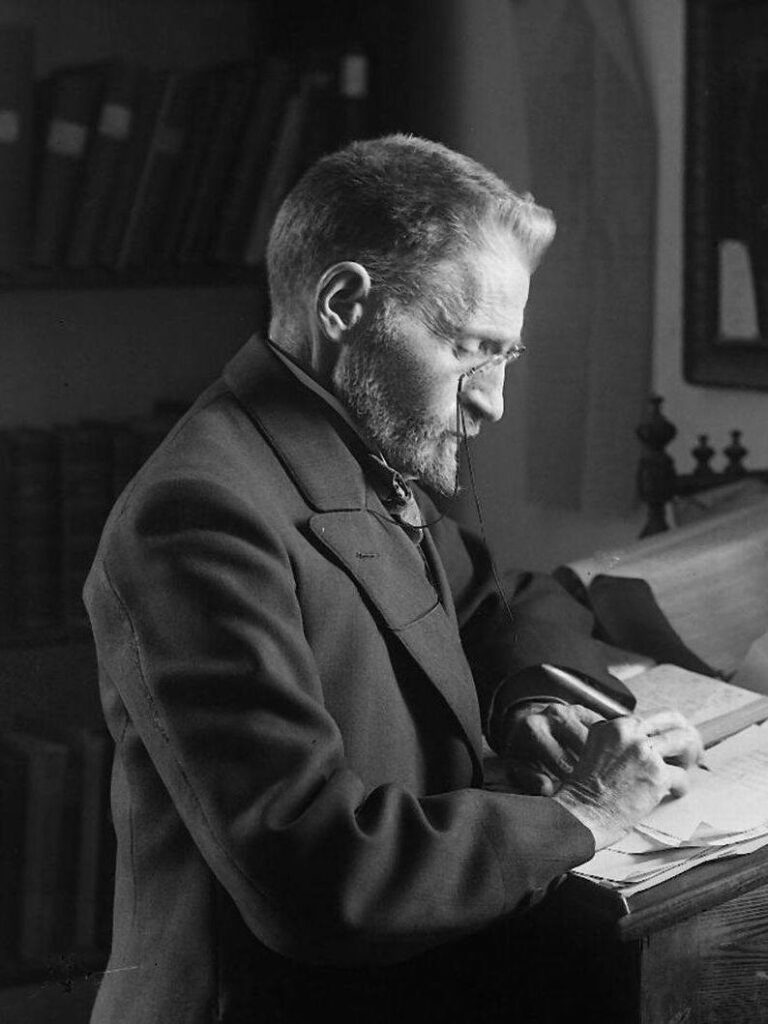
When Ben-Yehuda arrived in Palestine in 1881 he became convinced that the nation of Israel (the Jewish people) must speak its ancestral language: Hebrew. He ran into tremendous opposition from those that thought that Yiddish – among other suggestions– should be the common language. But he persisted, and spoke only in Hebrew with his son Itamar (originally named Ben-Zion; the latter changed his name after his mother died). Itamar became known as the first native-born Hebrew-speaker in 2000 years.
Imagine, if you will, taking an ancient language, like Latin or Acadian and turning it into a “living language” for debating in parliament, reporting the news, or building a multi-million dollar start-up. There were hundreds of vocabulary words that Ben-Yehuda had to come up with, basing himself on ancient Hebrew, Aramaic and even Arabic. Needing a word for electricity, he found the word חַשְׁמַל – “hashmal” in the first chapter of Ezekiel, which meant gleam or spark, and now we use that word for electricity, without thinking twice about it. Some of the words he invented didn’t quite catch on.
Other than writing an authoritative, multi-volume Hebrew dictionary (completed posthumously by his second wife, Hemda), his long-lasting accomplishment was establishing the Committee of the Hebrew Language (Va’ad HaLashon), which later became the Academy of the Hebrew Language. To this day, at its home on the campus of the Hebrew University in Jerusalem, the academy directs the development of Hebrew, including – but not limited – to inventing new words and terms.
The biography of AV”I (a Hebrew acronym for אֱלִיעֶזֶר בֵּן־יְהוּדָה – Eliezer ben Yehuda), and his family, is fascinating. There are many worthwhile websites and YouTube videos that you can find on your own.
AV”I died on the 26th of Kislev, 5683 – December 16, 1922. It’s interesting that in the Jewish tradition, we usually observe the anniversary of the death of a great leader, scholar, etc. How, appropriate it is that for the person responsible for the Rebirth of the Hebrew language, we mark his birth! May his memory be for a blessing!
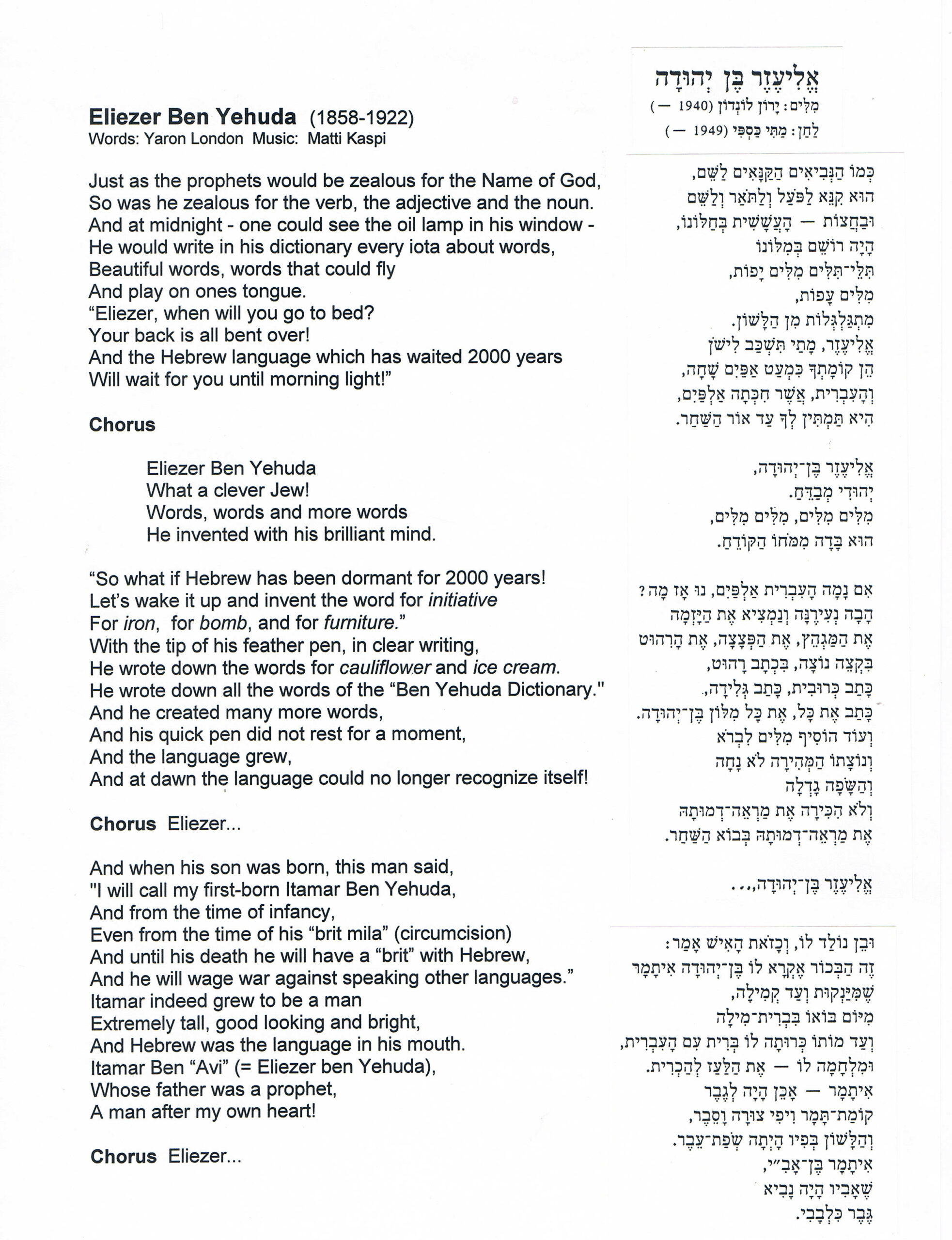
When you come to Israel I’ll be happy to take you to two buildings which served as AV”I’s homes in Jerusalem. In the meantime, enjoy the charming song about AV”I on YouTube. The link below is for the Hebrew text and English translation.
https://www.youtube.com/watch?v=HYGeOEziQtY&list=PLKblw3yQy_qjHzpHisxokmKRQH3lv0sHU