Would you like to learn something new? Watch the free video (link below) for a unique and (I hope) fascinating virtual seminar.
For hundreds of years the MENORAH (מְנוֹרָה – candelabra) and MA-GEN DAVID (מָגֵן דָּוִד – Shield of David or “Jewish Star”) have represented Judaism and the Jewish Peoplehood. But which of these is the FOREMOST symbol? Through a unique collection of pictures and sources we explore this hypothetical question, ending with a discussion about the Hanukkah Menorah. (Total: ~48 min.)
Oh, and watch for announcements about the sequel that will go into depth about the Emblem of the State of Israel.
Best wishes for a חַג אוּרִים שָׂמֵחַ – Chag Urim Same’ach; Happy Festival of Lights (AKA Hanukkah)!!
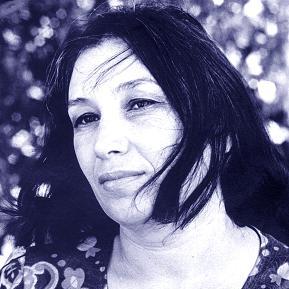
On a warm summer evening on June 26, 2004, corresponding to the 7th day of the Hebrew month of Tammuz, Naomi Shemer parted from this world. She left us a legacy of hundreds of songs most of which were both written and composed by her, others were melodies that she composed for poems that were written in Hebrew or that she translated from other languages.
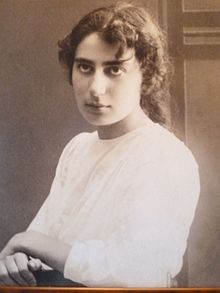
Rahel Bluwstein
Many remember Naomi Shemer for her iconic “Yerushalayim Shel Zahav” (Jerusalem of Gold), which she wrote/composed just a few weeks before the outbreak of the Six Day War in 1967. Others will forever sing the melodies she composed to several poems of “Rahel” (Rahel Bluwstein, 1890-1931).
Both of these women had spent significant parts of their lives along the southwestern shore of the Kinneret – the Sea of Galilee: Rahel had been trained in agriculture at the Kinneret Courtyard, and Naomi was born (on the 17th of Tammuz) on Kibbutz Kinneret, about a kilometer from the Courtyard. Both were laid to rest in the Kinneret Cemetery located between the two communities, right on the shore of the lake/sea of Kinneret. Many people make a pilgrimage to the cemetery to pay homage to the Zionist pioneers buried there, to read poems by Rahel’s grave and to sing songs – often with guitar or other accompaniment – by Naomi’s.
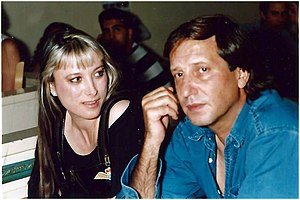
The journalist Yair Lapid (now Israel’s Foreign Minister and Alternate Prime Minister) had written a poetic eulogy for Naomi, which he called, “Hagevira Mul Ha’agam” – “The Lady by the Lake.” Kobi Oshrat put that poem to music, and designated veteran singers Yigal Bashan and Miki Gavrielov to record it. In 2014 an initial recording was made in the studio (a kind of dress rehearsal), but Yigal, who had been suffering from an extended illness, died before the final “cut” could be made. The project was temporarily shelved.
Mika and Yigal Bashan
In honor of what would have been Naomi Shemer’s 91st birthday this year, Kobi Oshrat asked Yigal’s widow, Mika Bashan, to allow him to release the song to the public, even though it was not a polished recording. She not only agreed but helped in its production. It can be found on the YouTube link: https://www.youtube.com/watch?v=QxorKL42YrE .
So here’s what’s behind the strange title. The lead story of the weekly Torah portion – “Shelah Lekha” (Numbers 13-15) – which we will read on Shabbat, June 5, is about the Twelve Spies (one from each tribe) who, at God’s command, are sent from the desert by Moses to scout the Land of Canaan (later to be known as the Land of Israel). Like TripAdvisor, they are given a list of things to look for and to evaluate.
Forty days passed. When they returned to camp, all the scouts had some positive things to say about the resources of the land. They even brought back samples of fruit, including a cluster of grapes that was so heavy it had to be carried on a pole carried by two people (the inspiration for the emblem of Israel’s Ministry of Tourism – see the picture).
Tragically, ten of the twelve scouts came to the conclusion that “…the country that we traversed and scouted is one that devours its settlers. All the people that we saw in it are men of great size…; we looked like grasshoppers to ourselves, and so we must have looked to them” (13:32-33). Only Joshua and Caleb said: “The land that we traversed and scouted is an exceedingly good land….Have no fear of the people of the country…. the Lord is with us” (14:7,10).
This is a story of PERCEPTIONS. Twelve people saw the exact same land and its inhabitants, ten of whom were so traumatized that they claimed that they looked like grasshoppers in the eyes of the “giants” – how did the 10 scouts know how they looked in the eyes of the inhabitants?! It seems to me they were projecting their fears and lack of faith on to the potential enemies. Only two scouts brought back a positive overall assessment. Caleb and Joshua were not delusional; they saw the identical, daunting challenges of the Land that the other ten saw; however, their perception and conclusions were different. They had faith that God will help the Israelites prevail.
The consequences of the negative reviews are well-known: the Israelites were doomed to wander the desert for 40 years – one for each of the days that the tribal representatives had scouted the Land, thus assuring that the generation of the ten “bad-reporters” would never merit to enter the Land. However, Caleb and Joshua and their families are to be rewarded and were allowed to settle in the Promised Land.
It’s 2021. The State of Israel and all who love her (“warts and all”) are faced with a Sisyphean war of perceptions. The news media, and certainly the social media, have decided overwhelmingly that the blame for the recent war between Hamas and Israel lies with – you guessed it – Israel. You’ve heard/seen the claims. You’ll find very little mention of the 4000+ rockets that were shot from Gaza into Israel along with the deaths and damage they caused. Their scathing reports (some blatant lies, others distortions of the truth, still others simply guilty of omission or any attempt at objectivity) have fueled, in part, anti-Semitic protests, and even physical attacks on Jews, in several parts of the world.
Even some North American Jewish celebrities, pundits and community leaders have come to the conclusion that Israel – if not totally to blame for the deaths of innocent Gazans and causing massive damage to buildings – bears the brunt of responsibility for the tragic results in Gaza. However, anyone who seeks the truth about what precipitated the recent conflict and what happened during the 11 days of fighting, can find balanced reports and commentary; I don’t want to summarize or paraphrase what has already been written. (If you need references, see my previous posts and shares on Facebook or write me from my Contact Page).
My personal conclusion? The best way to learn about Israel, and to make up your own mind, is to become a scout yourself. PLAN YOUR (NEXT) TRIP TO ISRAEL! Come with your rabbi or pastor, or on your own. But book a trip NOW! Delve into Israel’s millennia of history. Examine with your own eyes the Israel of the here-and-now with its Jewish and Arab populations, and be prepared to ask really tough questions.
Israel is not all “milk and honey” (13:27). It faces many ongoing domestic and geopolitical challenges (with a mixed record of how it has been dealing with those challenges). However, unlike the ten scouts/spies, I urge you not to jump to conclusions. Don’t be swayed by the media – whether critical or (rarely) sympathetic to Israel. Make your own assessments. Don’t project preconceived notions onto the realities of the country (the “grasshopper syndrome”). Scout out Israel’s accomplishments (the heavy “clusters of grapes”) and how it has survived and thrived despite all the odds stacked against it.
If you’re looking for a tour guide to help you with your scouting of the Land, I just might know the person for you…..
…فقال ابرام للوط لا تكن مخاصمة بيني وبينك …. لاننا نحن اخوان
‘Abram said to Lot, “Let there be no strife between you and me… for we are kinsmen…’(Genesis 13:8)
While most of the news media and social media have focused on the conflict between Hamas in Gaza and Israel; unfortunately, that’s not the only front on which Israel is fighting.
The recent intra-city rioting between Arabs and Jews in “mixed cities” (where there are significant populations of both subgroups) has been extremely worrisome. There are those who have said that it is as dangerous and ominous as the rockets being shot from Gaza. While some of these cities (such as Lod and the Jaffa section of Tel Aviv) have seen sporadic confrontations between Jews and Arabs, in recent months and weeks, there has been major rioting – on and off – since Sunday, May 9th.
Sadly, there has been a lot of rock-throwing, destruction and even a few deaths. At least ten synagogues have been torched (though no mosques) and nearly 700 Jewish homes have been burned or damaged (much fewer Arab homes). While, by far, most of the rioting has been carried out by Arabs (the majority of whom are aged in their teens and 20’s), there have also been radical Jewish groups who have retaliated and vandalized Arab neighborhoods.
There has been a lot of criticism directed at the Israeli Police who have not been proactive (to say the least) in curbing the violence or in trying to prevent it. In the last few days the General Security Service (“Shin Bet”) has been brought in to try to augment the work of the police and Border Police.
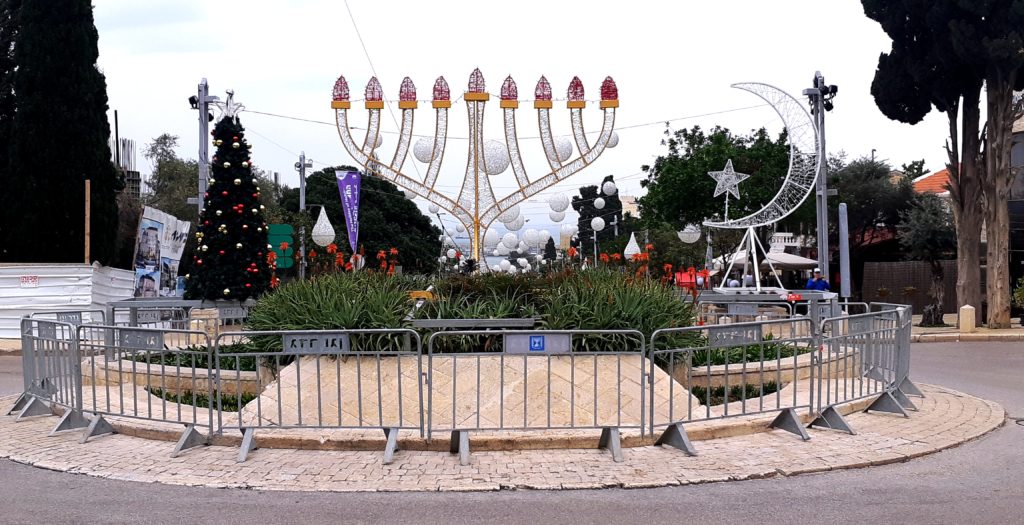
This round of rioting has been particularly disturbing since cities like Haifa and Acco (Acre) have been bastions of coexistence between Jews and Arabs – both Muslim and Christian – for decades (see the picture below of Haifa with the symbols of the three religions). As a tour guide I have often walked tourists through Arab sections of Acco, Haifa and even Jaffa – without a worry about our safety. It saddens me to see the peaceful coexistence begin to unravel.
A Jewish colleague who lives in the Galilee wrote that he often goes into Arab towns and villages for services (shopping, medical care, etc.). He’s not so sure that he will be able to do so safely in the foreseeable future. On the TV last week we witnessed Jews in one of the aforementioned cities being escorted by the police from their homes to safety. This was a sight that no one dreamed of seeing in the Jewish State.
Nevertheless, there have been some positive developments: There have been some Arab Knesset (parliament) members, as well as local leaders, who have publicly implored the Arab rioters to desist. There have been peaceful demonstrations of Arabs and Jews who have pleaded for the violence to cease and to renew the productive coexistence and civil cooperation which prevailed up to just 9 days ago.
On the television there have been public service announcements showing Arab/Jewish work partners standing shoulder to shoulder (from factories to hospitals….), as well as local friends – Jews and Arabs – from the aforementioned cities who were sitting in each other’s yards speaking about how their lives are intertwined where they live. And, as I write (May 18th in the evening), there are reports that in Lod – which has been particularly violent – the rioting has abated significantly and there are public gatherings of Arabs and Jews happening right now in which the two groups are trying to renew their shared destinies.
Where will all this lead? No one knows for sure. There are some analysts who claim that we are seeing the beginning of a civil war, or at least a third Intifada (Arab uprising); others believe that once there is a ceasefire between Hamas and the Israel Defense Forces that the civil unrest will begin to ebb. As one who believes strongly in coexistence, I pray that all Israeli citizens will come to their senses and will rebuild our common lives. May it be God’s will. בעזרת ה’ , إنشاء الله.
(I took the following photo of the roundabout at the bottom of the Bahai Gardens in Haifa, during the “Holiday of Holidays Festival” פסטיבל חג החגים – مهرجان عيد الأعياد which the city celebrates every December, involving all three Abrahamic religions)
In studying the book of Proverbs (Ch. 26 – today’s chapter of the daily Tanakh/Bible study program called “929” – the number of chapters in the Hebrew Bible), I came across two consecutive, contradictory verses (vs. 4-5) that are most apt for responding – or not responding – to anti-Israel and anti-Zionist media:
Vs. 5: Answer a dullard in accord with his folly, Else he will think himself wise.
So which is it? Do we try to respond to misguided, skewed anti-Israel propaganda in kind? Do we “lower ourselves” to the dullard’s level? Or do we ignore it, knowing that many of the anti-Israel bloggers, and the like, are not interested or capable of hearing what we have to say? (To paraphrase a Hebrew expression: if they say your sister is immoral, try to prove that you don’t even have a sister!)
Of course, the Talmudic answer is: “It depends….” We certainly don’t want to counter anti-Israel tirades with more tirades – that would be like the first verse above and would lend credence to their baseless claims. On the other hand, when encountering well thought-out criticism (even if it makes us uncomfortable), perhaps the second verse would indicate that we should try to respond rationally. Such criticism will usually be based on facts – or include kernels of truth – which we ought to recognize. If we fail to do so it will undermine the legitimacy of our position. At the same time, we need to point out where the critic is mistaken. We might not convince the critic of the correctness of our argument, but at least we can demonstrate that the critic is not as wise as s/he may think s/he is (vs. 4 above).
In my humble opinion, the most effective “response” to the dullards out there is to take the rhetorical offensive: send out LOTS of PR explaining what Israel is doing and why BEFORE Israel is forced to be on the journalistic defensive. Flood the social media with information (being cautious not to sound self-righteous – yes, Israel does make mistakes, but…). I realize that the anti-Zionist sentiment will always be there, but at least we will not “become like him” (as per vs. 4). Israel is a world leader in developing hi-tech; however, when using that technology for PR, the State of Israel is still in the dark ages.
Let’s do our part in trying to make up for some of the Israeli government’s PR sluggishness. Keep sharing those posts that resonate with you and that you think contribute to support Israel. Take part in webinars or other forums to be better educated and to spread the word to others. At this writing (Tuesday AM, May 18) it looks like the current fighting could be over by the end of the week; unfortunately, the PR War will be with us for a long time to come.
In honor of Jerusalem Day, following is one of my favorite quotations of S.Y. Agnon, who was awarded the Nobel Prize for Literature in 1966, from the collection of his short stories “Within the Walls”, (the Hebrew follows the English translation; I take responsibility for the latter):
There are places in Jerusalem that are familiar to me, and that I know well. But when I chance upon one of them, it seems to me that I’ve never seen it before.
In contrast, there are places that I’ve never been to before in my life, but when I chance upon them it seems to be that they are familiar to me, and I know them well.
And since all the days – including the nights – I would wander through the [streets and] squares of Jerusalem, I didn’t make the time to learn any trade. Even worse, I didn’t make time to study Torah. And a Jew who doesn’t occupy himself with Torah – his heart berates him and says, “And what will you answer on Judgment Day when they ask you if you occupied yourself with Torah?” What would I answer? I would answer: “I occupied myself with Jerusalem,” and I’m confident they will say, “You did well!…”
מקומות יש בירושלים שאני מכיר אותם ויודע אותם וכשאני מזדמן לאחד מהם דומה עלי שלא ראיתיו מעולם.
כנגדם יש מקומות שמימי לא הייתי שם וכשאני בא לשם דומה עלי שאני מכיר אותם ויודעם.
ומחמת שכל הימים לרבות הלילות מרבה הייתי לשוטט בחוצות ירושלים לא פניתי ללמוד שום אומנות. קשה מזה הייתי בטל מן התורה ויהודי שאינו עוסק בתורה ליבו מוכיחו ואומר, ומה אתה משיב ביום הדין כשישאלו אותך עסקת בתורה. ומה הייתי משיב. הריני משיב עסקתי בירושלים, ומובטחני שיאמרו לי יפה עשית…
Starting Sunday evening, May 9 through Monday, May 10 we observe “Yom Yerushalayim” – Jerusalem Day, marking the day on the Hebrew calendar when the Old City of Jerusalem (and especially the Kotel – the Western Wall), was liberated during the Six-day War and became part of one united Jerusalem under Israeli control. For many in Israel – and throughout the Jewish world – this is both a national and religious holiday. (Not everyone sees it that way.)
For me, the holiday is particularly significant, as I was blessed to visit Israel and Jerusalem for the first time, on the Ramah Seminar, during the summer of 1967 – just a few weeks following the Six-Day War. Thirteen years later my family and I moved to Jerusalem. For nearly 40 years our home has been in the southern neighborhood of Gilo, founded just four years after the war in what became Greater Jerusalem.
Yosef Sarig, 1944-1973
There have been many songs written about Jerusalem – before and since the Six-Day War. I would like to share one of my favorites with you – less known internationally than the famous “Jerusalem of Gold.” The song, “OHR VIRUSHALAYIM” – “Light and Jerusalem,” was written by Yosef Sarig (pronounced: sah-REEG). On this post you’ll find a link to one of several renditions of the song, as well as a link to the lyrics in Hebrew and English. The story of how it came about is as moving as the song itself:
The following is based on recollections by Yosef’s mother and brother, Tikva and Tzachki. His father was General Nahum Sarig, commander of the legendary Palmach unit in the Negev Desert during the 1948 War of Independence.
The Sarig family lived on kibbutz Bet Hashita in the Bet She’an valley in the north of Israel. In January of 1963, Yosef’s grandmother died. Since she was a fourth – or fifth – generation Jerusalemite, the parents borrowed one of the kibbutz trucks to bring the deceased to eternal rest in Jerusalem. The parents sat in the cabin of the truck and their five children sat in the back – together with the coffin. It was a particularly wintry day and it poured most of the way. All of a sudden, as they approached the beginning of the steep ascent to Jerusalem (at Sha’ar Hagai), the sun started to come out and a rainbow appeared. The rays of the sun piercing through the clouds, which accompanied them all the way to the cemetery, particularly made an impression on Yosef.
In January, 1972, Yosef, who was a talented musician and song-writer, was asked to write a song about Jerusalem for the Gevatron (singing) Ensemble’s performance in honor of Jerusalem Day that year. One evening he went to his room and in matter of hours wrote both the music and lyrics for the song. He came out and – as was his custom – he showed the lyrics to his mother asking if it was any good. She saw right away that his words described the light that they had seen on their way to Jerusalem exactly nine years earlier. She looked at him and said, “It’s enchanting… but what about the music?” He pulled out another page with the music which seemed to resonate perfectly with the lyrics.
On October 10, 1973, just a year and five months after the song was first performed, Major Yosef Sarig fell in battle on the Golan Heights. He was buried in his kibbutz along with ten other sons of the kibbutz who died in the Yom Kippur War. (The kibbutz was the community in Israel with the highest per capita casualties of that war.) Yosef’s brother, Tzachki, had been wounded at the beginning of the war and was in the hospital when Yosef was killed. His family waited until Tzachki was on his way to recovery before telling him the sad news. He became depressed with guilt, saying: “Why him and not me!”
OHR VIRUSHALAYIM became an instant “hit” and ever since has become an integral part of Israel’s musical legacy. It’s been translated into several languages. A folk dance to the song was choreographed by Shoshana Koplewitz. Ironically the lyrics do not mention the name of the city, except in its title. There’s no need; the song describes Jerusalem in a most unique and beautiful way. In 1975 Yosef was posthumously awarded the Medal of Distinguished Service (Itur Hamofet), but his songs – especially Ohr Virushalayim – were his awards to the nation. May his memory continue to be for a blessing.
Some links:
The song as sung by the Gevatron Ensemble:
https://youtu.be/94M7zG-Hcy4
The lyrics in Hebrew and English: See PDF above to view or download.
The State of Israel is celebrating its 73th year of independence this week (April 14 eve-15 in 2021), which is always preceded by a very sombre Memorial Day – Yom Hazikaron. This year we memorialized the 23,928 soldiers that fell in defending the State. The dramatic events leading up to the Declaration of the State of Israel on Friday, the 5th of Iyyar 5708 (corresponding then to May 14, 1948), are too many to discuss here. But here are 10 quick facts that you may not have known from other sources – unless you already visited Israel’s Independence Hall, currently undergoing major renovations. This is just a selection of my favorite tidbits:
1. The Provisional Council (the pre-state quasi-government) only voted to declare independence on May 12 – just two days before the declaration. David Ben Gurion, the head of the Council, said, “It’s now – or never!” The vote was 6 in favor and 4 against (there were three other members of the Council who could not attend: two were under siege in Jerusalem and one was abroad). That was a close call!
2. Although the British were only set to depart on Saturday, May 15, the Provisional Council knew that it would be impossible to hold a ceremony declaring independence on Shabbat (the Sabbath), so they set the time for Friday at 4:00pm, just a few hours before Shabbat was to start, and 8 hours before the official end of the British Mandate. People were asked to come at 3:30 and the ceremony started precisely at 4:00 (yes, it actually started on time!).
3. It would have been most appropriate to announce independence in Jerusalem, the historic capital of the Jewish people; however, city was under siege by local Arab militia. Consequently, it was decided to hold the ceremony at what had been the art museum of Tel Aviv since 1936. Prior to that it had been the private home of Meir Dizengoff – the first home built in the new “neighborhood” of Tel Aviv. In 1911 Dizengoff became the first mayor of Tel Aviv. Outside the Hall of Independence is a sculpture of Dizengoff riding his female horse, so there is Mayor Meir on his mare!
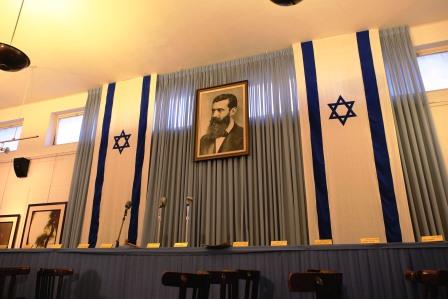
Independence Hall Dias Today
4. The art museum was chosen because the main hall had high windows and the room could have served as a makeshift bomb shelter, in case the Arab countries would attack that day. The museum didn’t have enough chairs for the some 250 people who were invited to attend the ceremony. So, on Friday they had to run around to local cafes asking to borrow chairs!
(Pri-Or_Photohouse)
5. They knew they would need amplification for the ceremony, so they turned to a store called “Tzlil” (literally: sound or tone) and asked to borrow a microphone and amplifier. The owner generously said that he would donate the equipment – on the condition that the name of his store appear on the microphone. Thus “Tzlil” became the first advertisement in the new State of Israel! (Left: see the writing on the microphone next to David Ben Gurion)
Outside the Hall of Independence
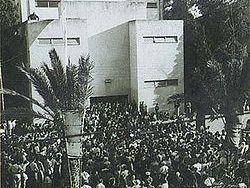
6. Invitations had to be hastily hand-delivered to some 200+ people. The invitation said that it was classified and that the invitees should keep the contents of the invitation secret! (See the photo – right – of the throngs of people waiting outside during the Declaration!).
7. The text of the Declaration of Independence wasn’t finalized until an hour or so before the ceremony. Ben Gurion was busy making corrections practically on his way to the ceremony! A fancy parchment had been prepared – but it was blank! Ben Gurion read the Declaration from the type-written, correction-riddled pages, hidden by the parchment! Those that were asked to come up and sign the Declaration following the ceremony did so on blank parchment!
(Israel Philatelic Federation)
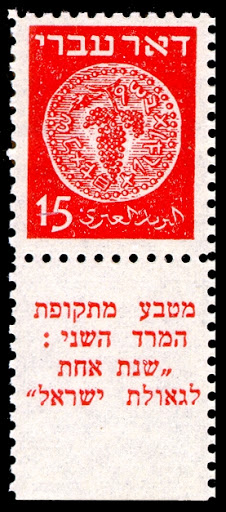
8. The name of the new state was not announced prior to that Friday, which is why there was such a rousing applause during the declaration ceremony when David Ben Gurion (who became prime minister) announced that the new country would be called: “The State of Israel.” Among other names that had been suggested were: Judea, Zion and even Eretz Yisrael (the Land of Israel). But all of the trappings of a new state had to be put into motion even before the declaration. Not knowing what the country would be called they had issued postage stamps that read: דואר עברי “Do’ar Ivri” or “Hebrew Post”! (See picture, left)
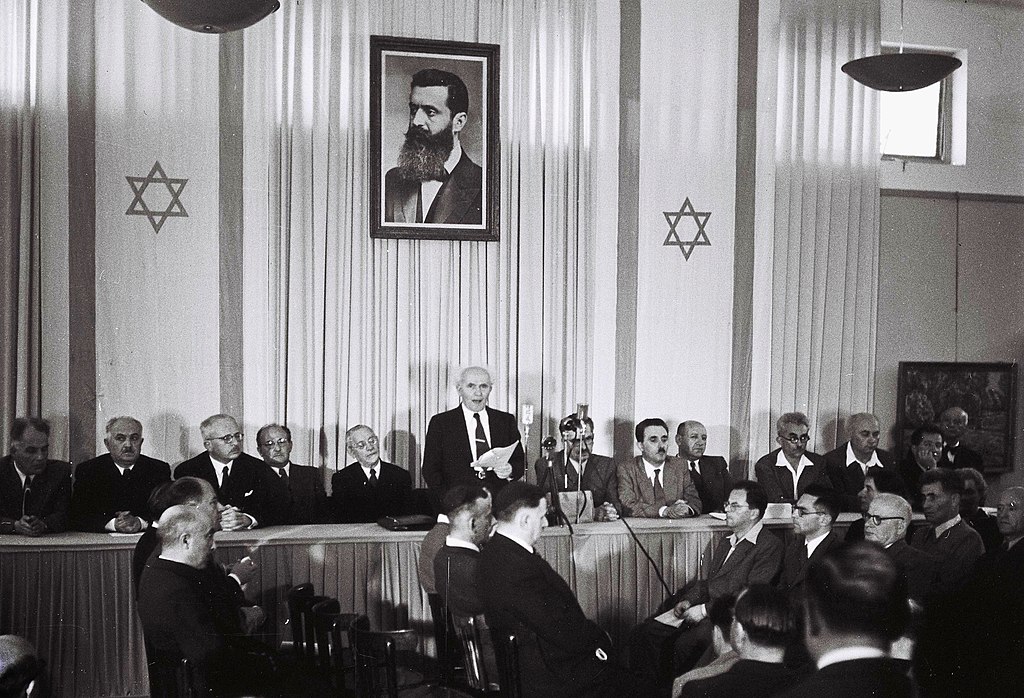
9. There were only two women who signed the Declaration parchment: Rachel Cohen-Kagan (who became a member of the first Knesset/Parliament) and Golda Meyerson, who later Hebraized her surname to Meir – destined to serve as prime minister of the State, 1969-1974. (In the picture below, one can see a partial profile of her, sitting in front of the third man from the right at the dais). Golda Meir cried through much of the ceremony. When asked if she had been crying because she was overwhelmed with excitement, she is purported to have responded that she was crying for the 6 million Jews for whom the State of Israel was declared a few years too late.
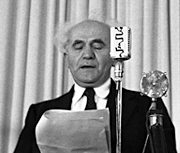
TEL AVIV, ISRAEL – MAY 14: In this handout from the GPO, David Ben Gurion, who was to become Israel’s first Prime Minister, reads the Declaration of Independence May 14, 1948 at the museum in Tel Aviv, during the ceremony founding the State of Israel. (Photo by Zoltan Kluger/GPO via Getty Images) *** Local Caption *** David Ben Gurion
10. In the crowded room there wasn’t enough space for the orchestra, which had to be placed one floor above the hall. When Ben Gurion called the meeting to order, someone had to run upstairs to tell the orchestra to start playing Hatikva -“the Hope,” which was later adopted as the national anthem of the new State of Israel.
Sorry, you could look on Waze or Google Maps, but you won’t find a street in Jerusalem (or elsewhere in Israel) named for Wilfrid Israel: a remarkable Jew, and proud German, who saved many more Jews than Oskar Schindler – before and during the Holocaust.
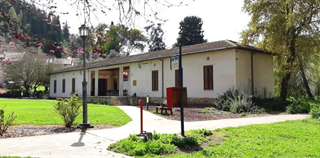
Wilfrid Israel Museum, 2021
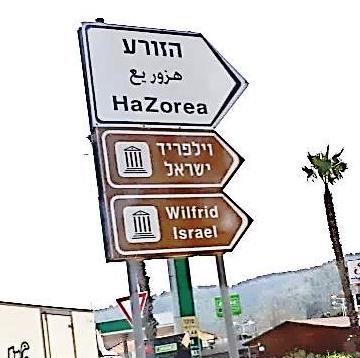
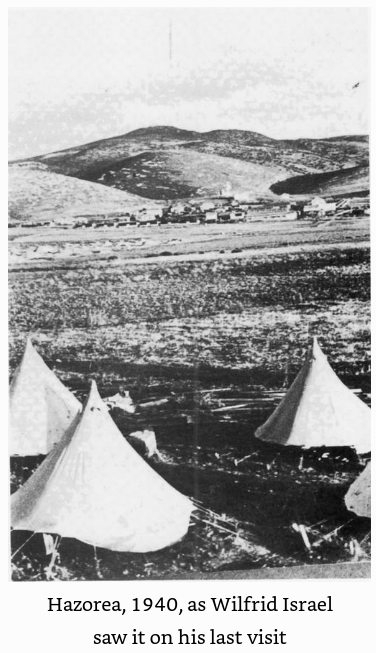
However, in the heart of Kibbutz Hazorea (pronounced: ha-zo-RAY-ah), in the western Jezreel valley of Israel, there is a boutique art museum named for Wilfrid Israel. Friends of his from Berlin were among the founders of the kibbutz in 1934, and Wilfrid visited the fledgling kibbutz twice (in 1934 and 1940), but he was not a member. How did he come to merit having a museum in his name established on this particular kibbutz?
To discover the answers to the questions above, you are encouraged to read the biography, see the movie, and/or or, at least, read about him on Wikipedia (See “Sources and References” below). These were the main sources of information for this post. In the meantime…
In honor of Israel‘sHolocaust Martyrs’ and Heroes’ Remembrance Day(Yom HaShoa VehaGevura), which will be observed on April 7/8, 2021, I present below a thumbnail overview of the unassuming and indefatigable Wilfrid Israel.
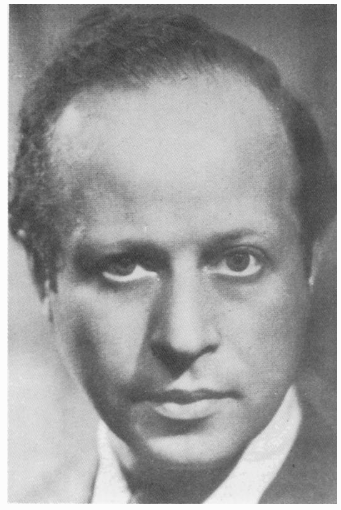
Wilfrid Israel, 1942
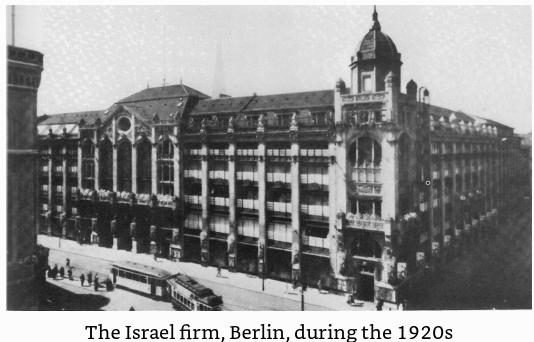
Wilfrid Berthold Jacob Israel (hereafter: Wilfrid) was born in London on July 11, 1899 to a wealthy Jewish family, but grew up and lived in Berlin. His great-grandfather, Nathan, founded the department store “N. ISRAEL” in Berlin, which remained in business until February, 1939. Wilfrid dreamt about becoming a sculptor, but with family pressure he eventually assumed the directorship of “N. Israel,” until the department store was taken over by the Nazis.
(Bertha Heilbut, New York)
Wilfrid’s mother’s grandfather, Nathan Marcus Adler, was Chief Rabbi of the United Hebrew Congregations of Great Britain. The family Wilfrid was born into was not religiously observant; however, much like other prosperous German Jews in the early 20th century, they were very involved in the Jewish community.
Wilfrid was active in the Werkleute (literally, “work people”) – a German Jewish youth movement, in which he and his friends studied Jewish history and customs, but were not outwardly religious. Some of his friends from the Werkleute made Aliya (moved to Israel) in 1933, and in 1934 established Kibbutz Hazorea. Meanwhile, Wilfrid was attracted to Martin Buber’s intellectual approach to Judaism and utopian Zionist vision of a bi-national state.
Following are some highlights of Wilfrid’s many accomplishments (not in chronological order):
* Served as a key link – together with the Quakers from the UK – in organizing the “Kindertransport” operation that brought over 10,000 German Jewish children to England in the late 1930s.
* Aided Recha Freier in the founding of “Youth Aliya” (the effort to bring children to pre-state Israel before and during World War II).
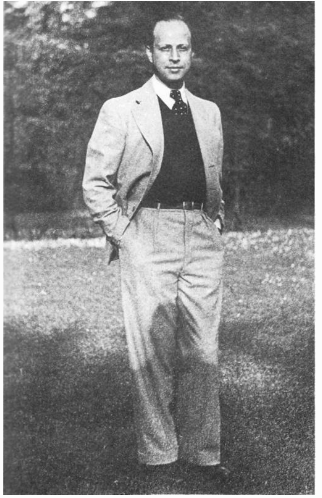
Wilfrid at Schwanenwerder, Berlin, about 1932 (Yosef Amir)
* Was appointed the international chairman of the Ben Shemen youth village in Palestine.
* Saved hundreds of Jewish – as well as non-Jewish – employees of “N. Israel” department store from the clutches of the Nazis.
* Ransomed hundreds of Jews from the Gestapo.
* Convinced the British authorities to establish a transit camp in Britain for young men released from the concentration camps in Germany, and consequently saved thousands of lives.
* Met often with Zionist leaders; such as: Chaim Weizmann, Max Warburg and Henrietta Szold.
* Was a frequent guest at the home of Albert Einstein, who said about Wilfrid: “Never in my life have I come in contact with a being so noble, so strong and selfless as he was – in very truth a living work of art” (From a condolence letter to Wilfrid’s mother, Amy Israel, soon after Wilfrid was killed; from the archives of the Wilfrid Israel Museum).
* Studied in the adult Jewish education settings established by Martin Buber, who described Wilfrid as “a man of great moral stature [who] was dedicated to the service of others.” (From N. Shepherd, see below)
* Escaped to London in 1939 and became an advisor to British MPs and ministers regarding the fate of European Jews influencing policy makers behind the scenes.
(Kibbutz Hazorea Archvices)
* Seriously considered making Aliya (moving to pre-state Israel) when the war would come to an end. In fact, at his request, the members of Kibbutz Hazorea agreed (after a heated debate) that Wilfrid would be allowed to build a bungalow on their property where he could fulfill his dream of being a sculptor.
* Traveled to Portugal and Spain to help Jewish children make their way to Palestine.
All the above – and much more – Wilfrid managed to achieve until his tragic death just a month shy of his 44th birthday. On June 1, 1943, he was flying from Lisbon to London when the commercial airplane he was on was shot down by the German Luftwaffe (Nazi air force).
In his will (which, ironically, he had written just before he flew to Portugal) Wilfrid had bequeathed his extensive art collection of mostly sculptures from the Far East to Kibbutz Hazorea. The kibbutz members began building the Wilfrid Israel Museum in 1947, and opened the museum in 1951.
In August, 2020, there was a major burglary at the museum and, unfortunately, many of Wilfrid’s Far Eastern sculptures were stolen; to date, none have been recovered. Nonetheless, the museum still functions and exhibits works of contemporary Israeli artists.
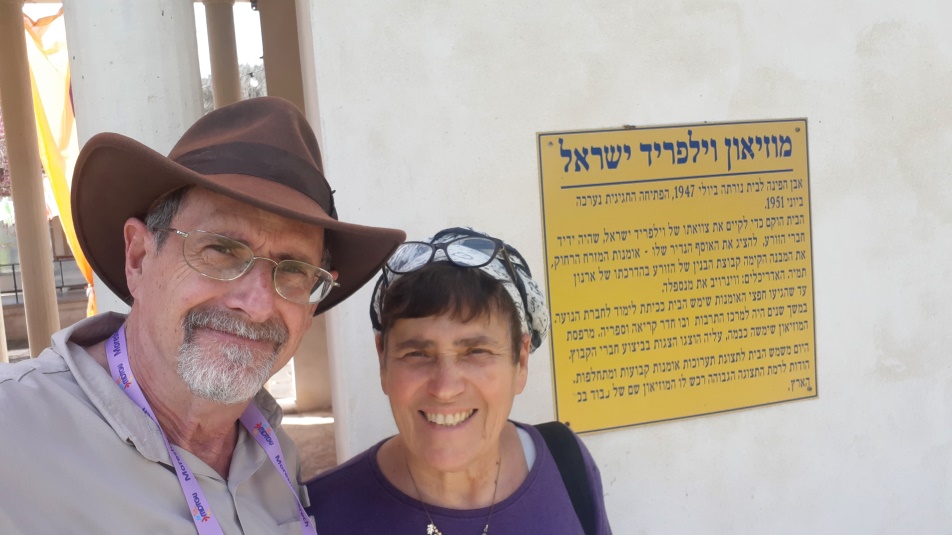
Joe and Sue Freedman at the Wilfrid Israel Museum, March, 2021
My wife, Sue, and I recently made a “pilgrimage” to the museum, which is a beautiful tribute to a humble but amazing personality.
So, how is it that we don’t hear more about Wilfrid Israel (and yours truly only found out about him a couple of months ago)? Why is there no street named for him? How is it that even Kibbutz Hazorea members don’t publicize Wilfrid’s heroic life? There are a number of possible answers to these questions, which I would be happy to discuss in a virtual lecture/tour. Contact me for more information. In the meantime, I encourage you to do some research (see the following):
Sources and References
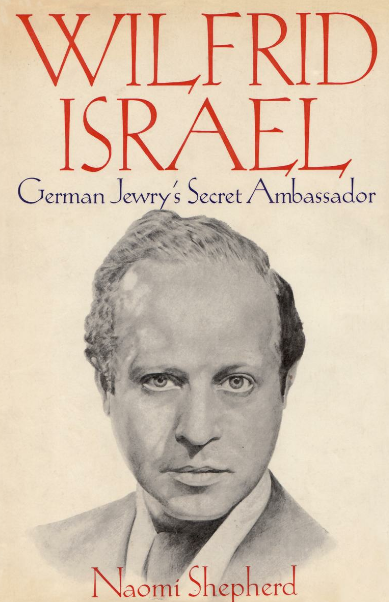
>The comprehensive and fascinating book, “Wilfrid Israel: German Jewry’s Secret Ambassador,” by Naomi Shepherd, re-published in the UK by Halban Publishers Ltd as an ebook only. See: https://www.halbanpublishers.com/nonfiction#/wilfrid-israel/ A print edition, under the name: A Refuge from Darkness: Wilfrid Israel and the Rescue of the Jews, is available from Amazon. I am grateful to the publisher and author for permission to display photos from the book in this post.
>The Israeli filmmaker, Yonatan Nir, made an outstanding documentary movie, “The Essential Link: The Story of Wilfrid Israel,” in 2017. For a trailer in English, see: https://www.wilfridisraelfilm.org/ The film will be screened on the eve of Holocaust Memorial Day, April 7, 2021 at 8pm, Israel time. (The registration form is in Hebrew: https://www.yonatannir.com/wilfridisrael)